Blog Planning
Time blocking on paper: how to plan your day in blocks (without becoming a robot)
What time blocking is, why it works better on paper and how to plan your day in 3 to 5 blocks with room for the unexpected. With a real-day example.

To-do lists have one flaw: they don't know how long the day is. You can write down fifteen things for a Tuesday that really only has three free hours, and feel by the evening that you've failed. Time blocking fixes that very simply: it gives every task a place on the clock.
What it is and why paper works better
You divide the day into blocks and give each one a kind of work: 9 to 11, the report; 11 to 11.30, emails. The list says what; the blocks say when and for how long.
Cal Newport, a computer science professor at Georgetown University and the author of Deep Work, has planned his days this way, by hand, for years. His argument is persuasive: once you see your day drawn out, you can't kid yourself about what fits.
Two ideas explain why it works:
- Parkinson's law. In 1955 the British historian C. Northcote Parkinson wrote in The Economist that "work expands so as to fill the time available for its completion". A block with an end time puts a fence round it.
- The planning fallacy. Psychologists Roger Buehler, Dale Griffin and Michael Ross (1994) asked students to predict when they'd finish their final-year thesis: on average they said about 34 days and took almost 56. Most of us underestimate how long things take. That's why blocks need slack.
Why paper? Because you see the whole day (and the week) at a glance, redrawing takes ten seconds and a rubber, no notification interrupts you, and writing by hand makes you choose: not everything fits, and that's a good thing. I've summed up the research in what science knows about writing by hand.
Step by step in 5 minutes
Do it the night before or first thing, in pencil:
- Write in the fixed things. Meetings, appointments, the school run: whatever can't move.
- Choose what matters. One or two tasks that would make the day worthwhile.
- Draw 3 to 5 big blocks, an hour or two each. Put the important work in your best hour.
- Add slack. Estimate how long you think it'll take and add 25 to 50%. If there's time left over, it's a gift.
- Batch the small stuff. Emails, calls, errands: together in one "odds and ends" block, not scattered across the day.
One more tip: block by energy, not just by task. Many people think best in the morning and flag after lunch; others work the other way round. Energy shifts across the month too: if that interests you, see how to plan with your inner seasons.
A real day
Here's how a Tuesday might look for someone working 9 to 5.30 with a lunch break:
| Time | Block | What |
|---|---|---|
| 7.00–7.45 | Me time | Tea, two lines in the journal, a ten-minute walk |
| 9.00–11.00 | Focus | The important task, phone in another room |
| 11.00–11.30 | Odds and ends | Emails and messages |
| 11.30–13.00 | With others | Meetings and calls |
| 13.00–13.45 | Lunch | Away from the screen |
| 13.45–16.00 | Lighter work | Tasks that need less concentration |
| 16.00–17.30 | Slack | Whatever ran over; if there's time, set up tomorrow |
| 18.30–19.30 | Body | Yoga or a walk |
| 22.00 | Wind-down | Screens away, a book |
Notice what isn't there: no 15-minute slots and no day filled to the brim. There's an hour and a half of slack and an hour just for your body.
Three mistakes that spoil it
- Blocks with no slack. If every minute is taken, the first surprise knocks everything over and you spend the day chasing the plan.
- Tiny blocks. Planning in 15-minute slots is exactly what turns you into the robot in the title. Keep blocks big and flexible.
- Binning the plan when it goes wrong. A plan isn't a contract. Newport is clear about this: when the day gets derailed, redraw the blocks that are left. Cross out and start again; doing it two or three times a day is normal.
The blocks almost nobody writes down
- Commutes and waiting. The journey, parking, the queue.
- Transitions. Ten minutes between one thing and the next, to breathe.
- Lunch, sitting down and away from the screen.
- Proper breaks, away from your desk.
- A block for you: reading, moving, doing nothing. If it isn't written down, the urgent will swallow it.
- Closing the day: five minutes to empty your head before you switch off.
If you're planning 2027, the four-evenings method goes from the year to the month and the week; blocks are the last step: the day.
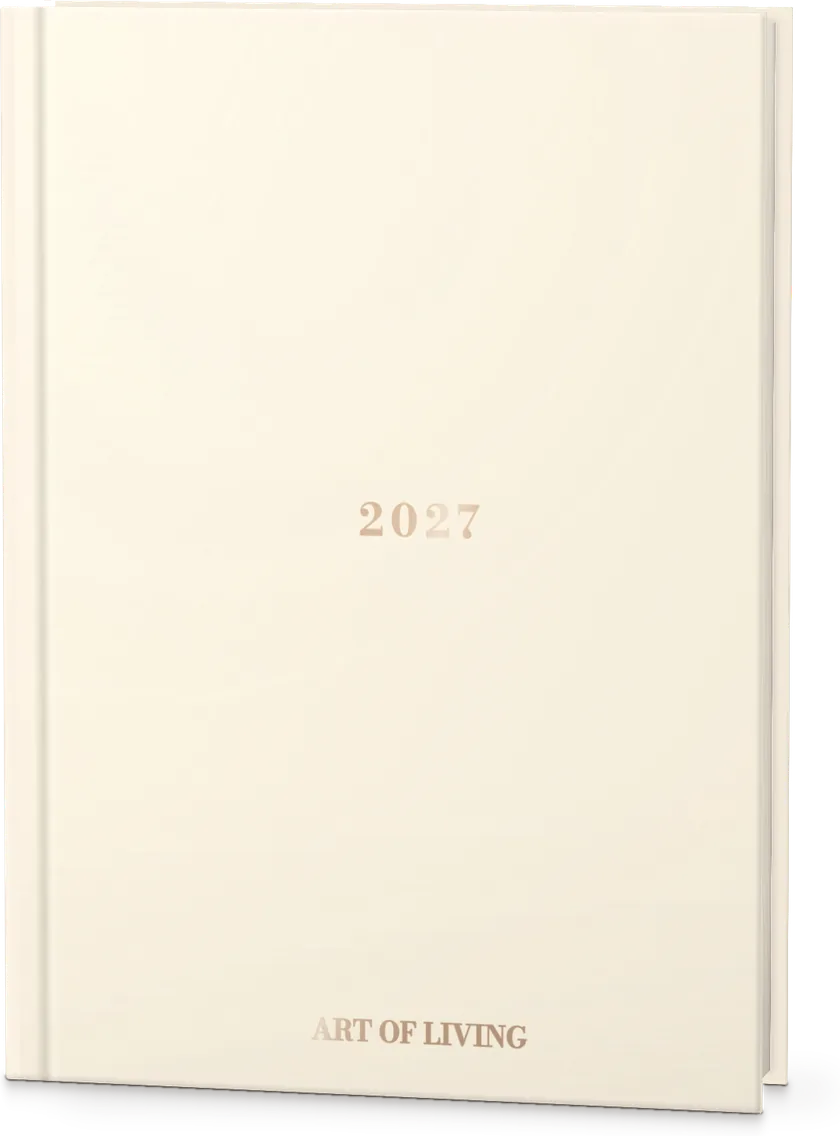
In my journal, each week takes up a double page with a column for every day from 6 am to 11 pm, designed precisely for this: drawing your blocks by hand and seeing the whole week at a glance.
Keep reading

Winter blues: how to look after your mood in the dark months (what the science says)
Why winter weighs on your mood, when the winter blues mean it's time to see your GP, ten simple habits that help and how to observe yourself for two weeks.
Read
Secret Santa gift ideas: 15 small, thoughtful gifts (that won't end up in a drawer)
Secret Santa ideas under £10, £20 and £30, gifts that arrive in time even if the swap is tomorrow, and simple wrapping: 15 small gifts people actually use.
Read