
Blog Body
Anahata meaning: the heart chakra (and why I named my journal after it)
Anahata means ‘unstruck’ in Sanskrit: the fourth chakra, the heart. Its origins, symbols, three simple practices and why my journal carries its name.
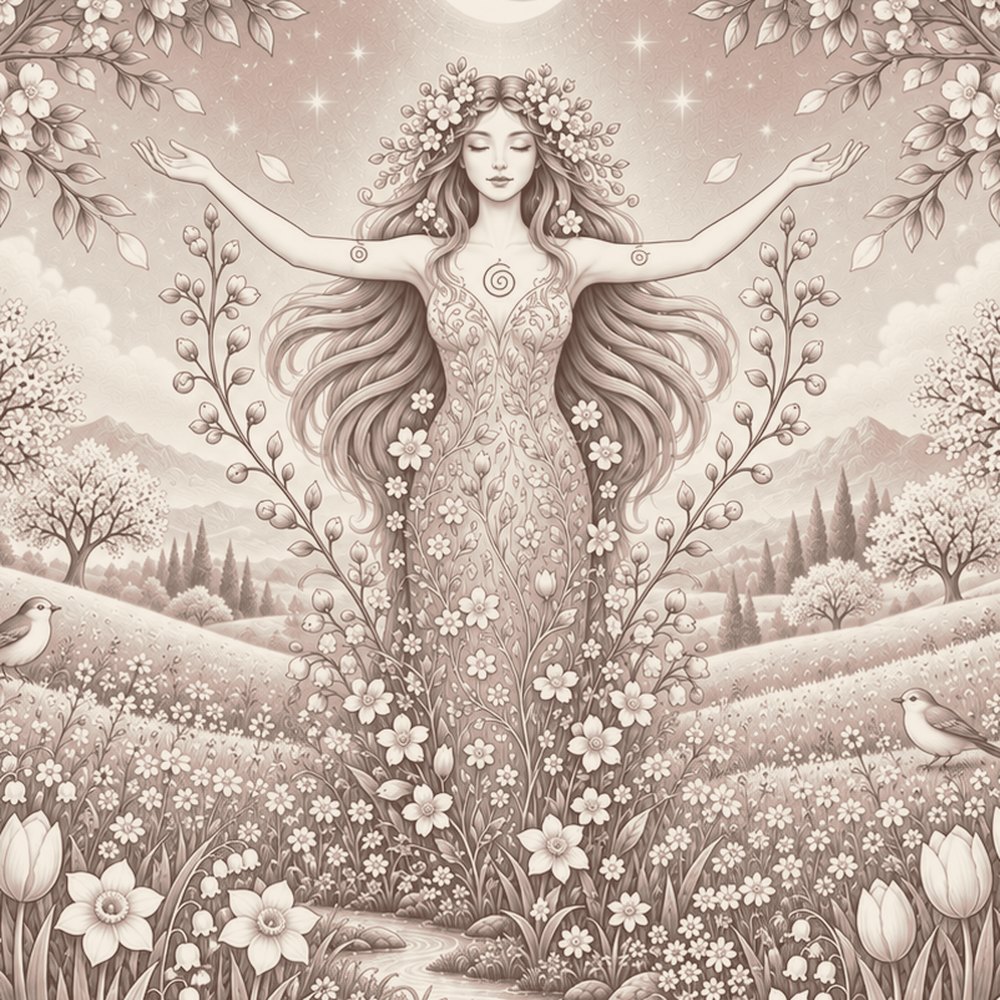
If you've seen the name of my journal, you may have wondered what Anahata means. It's a Sanskrit word with a beautiful story behind it, and today, the day I chose to introduce the journal, feels like the right moment to tell it.
The word
Anāhata (अनाहत) is made of the prefix an-, "not", and āhata, "struck" or "hurt". Together they mean "unstruck", "unhurt", "unbeaten".
In the yoga tradition, the word appears above all in one phrase: anāhata nāda, "the unstruck sound". Every sound we hear is born of a collision: a hand on a drum, breath against the vocal cords. The anāhata nāda would be the only sound that needs no striking: an inner sound that texts such as the fifteenth-century Hatha Yoga Pradipika describe in deep meditation. The tradition places it in the heart, which is how the heart chakra got its name.
I like to read that meaning simply: there is a part of you that stays whole, however much the year has shaken you.
Where it is and what it represents
In the seven-chakra system best known today, Anahata is the fourth, in the centre of the chest, level with the heart.
| Aspect | How it's described |
|---|---|
| Position | Fourth chakra, centre of the chest |
| Element | Air |
| Symbol | A twelve-petalled lotus with a six-pointed star inside (two interlaced triangles) |
| Seed sound | Yam |
| Colour | Green in modern Western systems; older texts give it other colours |
| Associated qualities | Love, compassion, forgiveness, connection with others |
The classic text that describes the chakras in most detail, the Ṣaṭ-cakra-nirūpaṇa (1577), paints this lotus the colour of the bandhuka flower, a deep red, with a smoke-coloured hexagon inside. Green came much later, with twentieth-century Western systems.
Air stands for movement and lightness; in ayurveda, yoga's sister tradition, it is also one of the elements used to read the body, as I explained in ayurveda and the seasons.
An honest note: chakras are a symbolic map, not anatomy. They don't show up on an X-ray or an MRI scan, and science has not shown that they exist as physical structures. Within their tradition they are a way of paying attention to the body, the breath and what you feel, one centre at a time. That's how I use them.
The heart as a bridge
Of the seven chakras, three sit below Anahata and three above it:
- The lower three (root, sacral and solar plexus) are linked with safety, pleasure and willpower: the practical things that hold you up.
- The upper three (throat, third eye and crown) are linked with expression, intuition and awareness: the subtle things.
Anahata sits right in the middle, which is why it's often called the bridge: the place where doing and feeling stop travelling separately. It's a lot like a good day, which has hours and tasks but also something that can't be measured in hours.
Three simple practices
1. Slow breathing (5 minutes). Sit with one hand on your chest. Breathe in for a count of five and out for a count of five: that's about six breaths a minute. A 2018 review of studies from the University of Pisa (Zaccaro and colleagues) found that breathing at fewer than ten breaths a minute was linked with feeling calmer and with favourable changes in heart rate variability. It isn't magic, but it slows you down.
2. Anahatasana, the melting heart pose (2–3 minutes). Kneel with your hips directly over your knees, walk your hands forward and let your chest sink towards the floor, resting your forehead or chin. It's a gentle opening for the chest and shoulders, and you may know it from class as a variation of puppy pose. Put a blanket under your knees if they complain, and if you have a shoulder or back injury, check with your GP or yoga teacher first.
3. A gratitude letter (10 minutes). Write by hand to someone who helped you this year: what they did and what it changed in you. Post it or keep it. As I wrote in what science knows about writing by hand, putting gratitude on paper has measurable effects on mood.
Why Anahata Sunrise
I designed this journal to bring together two things we usually keep apart: organising the day and feeling it. On one side, the week with its hours from 6am to 11pm; on the other, a daily page to write about how the day actually felt (Saturday and Sunday share one). The practical below, the subtle above and the heart in the middle: I couldn't find a better name than Anahata.
And Sunrise, because every day begins again. If you didn't write yesterday, if the week went sideways, the sun still rises tomorrow. It's the same idea that runs through the wheel of the year: the light always comes back.
If you'd like to know who's behind it, I tell you on the About page. And if you'd like to see inside, here is my journal.
Keep reading
Winter blues: how to look after your mood in the dark months (what the science says)
Why winter weighs on your mood, when the winter blues mean it's time to see your GP, ten simple habits that help and how to observe yourself for two weeks.
Read
Secret Santa gift ideas: 15 small, thoughtful gifts (that won't end up in a drawer)
Secret Santa ideas under £10, £20 and £30, gifts that arrive in time even if the swap is tomorrow, and simple wrapping: 15 small gifts people actually use.
Read