Blog Planning
How to choose a planner for 2027: weekly, daily, paper or tablet?
Week to view or a page a day, dated or undated, A5 or smaller, paper or tablet: seven questions and a table to help you choose your 2027 planner or diary.

November is when next year's diaries fill the shelves and suddenly you have to decide: week to view or a page a day? Dated? Paper or tablet? Here's an honest guide, with a disclaimer up front: I'm not impartial, because I design a journal. But that's exactly why I know these questions so well, so here they are, straight.
A note on words: in the UK a planner is often simply called a diary ("2027 A5 diary, week to view"). I'll use both.
Seven questions before you buy
- What will you write most: appointments or thoughts? If it's the first, you need hours; if it's the second, white space.
- How much is in a normal day? Three appointments fit anywhere; twelve don't.
- Where will it live? In your bag every day, or on your desk.
- Do you write daily or in bursts? Empty dated pages weigh on some people and spur others on.
- What do you write with? With a fountain pen or felt tips, paper matters far more.
- Do you want more than a calendar? Habits, goals, mood, moon phases.
- Does your tablet rarely leave your hand? Then perhaps half the answer is digital.
Jot down your answers and read on: each section brings you back to one of them.
Week to view or a page a day
Week to view. The whole week across a double page. You can see at a glance what's coming, which day is packed and where there's space. It's the most practical for work and family, and the one that works best for time blocking. Its limit: little room to write about how things went.
Page a day. One page for every day. There's room for lists, notes and how you felt. It's thicker and heavier, and the week is harder to see: you have to flick through to know what Thursday holds.
Both. Some planners combine a weekly view for planning with daily pages for writing. They're bulkier, but they settle the real question: whether you only want to get organised or also want to keep a journal.
Dated or undated
A dated diary saves you work and gives you structure: open it and you're on today. An undated one forgives gaps and lets you start whenever you like, but you have to write in every date yourself, which is fun in January and much less so by March.
If you write in bursts and blank pages make you feel guilty, go undated. If starting is the hard part, go dated: the structure pulls you along.
And if your year really begins in September (teachers, students, parents), an academic or mid-year diary that runs from August or September may suit you better than a calendar-year one.
Size, paper and binding
- Size. A5 (148 × 210 mm) is the classic balance: it fits in a medium handbag and leaves room to write. A6 is pocket-sized but cramped for planning. B5 or A4 are desk companions.
- Paper. Check the weight: below about 80 gsm, ink tends to show through. If you use a fountain pen or felt tips, always test a corner.
- Binding. A hardback survives twelve months in a bag. Spiral binding opens completely flat but snags and bends. A thread-sewn binding lasts longer than a glued one and opens more easily.
Paper or tablet? What the science says
In 2021 a University of Tokyo team led by Kuniyoshi Sakai published a study of 48 people in Frontiers in Behavioral Neuroscience. Participants read a conversation about plans and noted the appointments in a paper diary, on a tablet or on a phone. Those using paper finished sooner and, when recalling the appointments an hour later, showed more activity in brain areas linked to language, visualisation and memory.
It's an interesting result, with small print: the sample was small, part of the funding came from a company and recall was only measured after an hour. It fits with what we already knew about writing by hand, but it doesn't make paper compulsory.
Tablets have real advantages too: no extra weight, always with you, and you can search, copy and correct. If you already write on the screen with a stylus, a hyperlinked PDF planner may be your best option.
Summary table
| If you… | You'll probably prefer… |
|---|---|
| Have lots of appointments and little time to write | Week to view |
| Want to write about how each day went | Page a day |
| Want to get organised and reflect | Week to view + a page a day |
| Write in bursts | Undated |
| Carry it in your bag every day | A5 or smaller, hardback |
| Use a fountain pen or felt tips | Heavier paper, sewn binding |
| Live with your tablet and stylus | A digital PDF planner |
What I chose
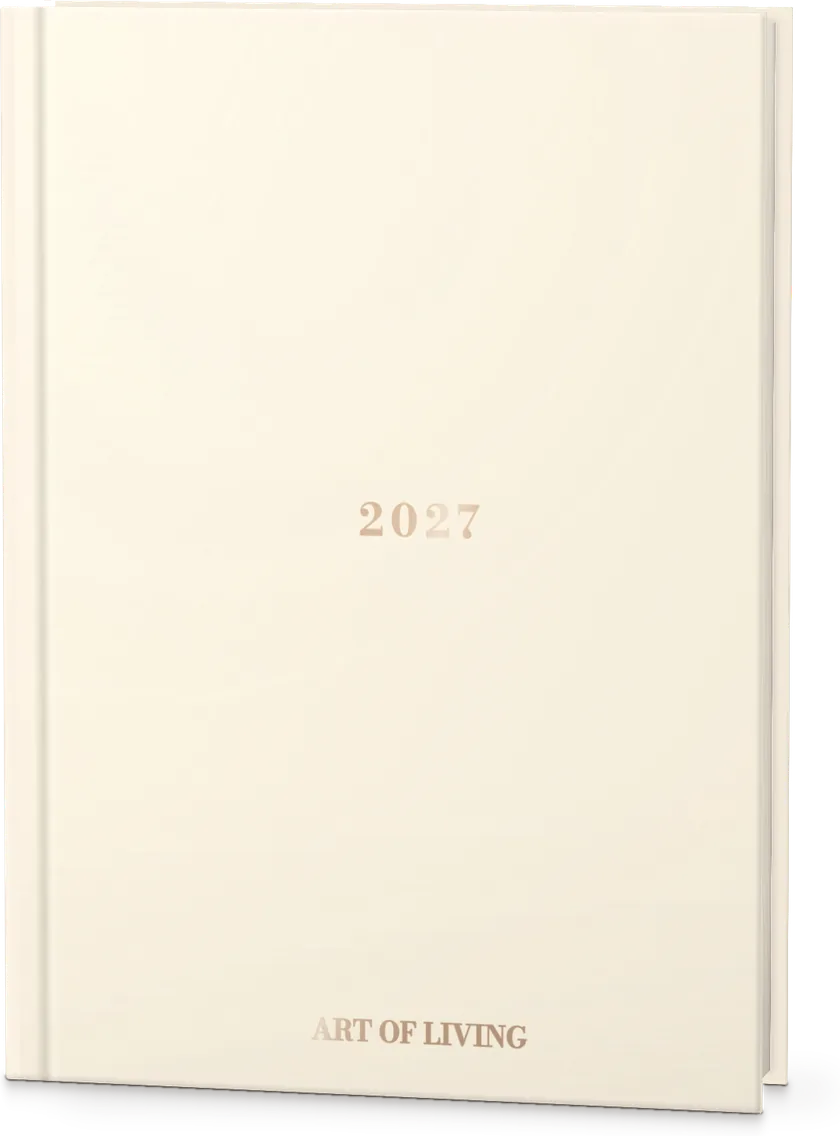
As I said, I'm not impartial: I couldn't choose, so I made both in one book. My journal has the week across a double page, with hours from 6 am to 11 pm and a notes column, followed by a page for each day (Saturday and Sunday share one); it's A5, hardback and thread-sewn. And for anyone who lives with a stylus in hand, I also made a tablet version.
Whatever you choose, the best planner is the one you actually open. And once you have it, here's how to plan 2027 in four evenings.
Keep reading

Winter blues: how to look after your mood in the dark months (what the science says)
Why winter weighs on your mood, when the winter blues mean it's time to see your GP, ten simple habits that help and how to observe yourself for two weeks.
Read
Secret Santa gift ideas: 15 small, thoughtful gifts (that won't end up in a drawer)
Secret Santa ideas under £10, £20 and £30, gifts that arrive in time even if the swap is tomorrow, and simple wrapping: 15 small gifts people actually use.
Read